Showing posts with label Aransas National Wildlife Refuge. Show all posts

Wednesday, January 1, 2025

Aransas National Wildlife Refuge, Texas 12/27/2024

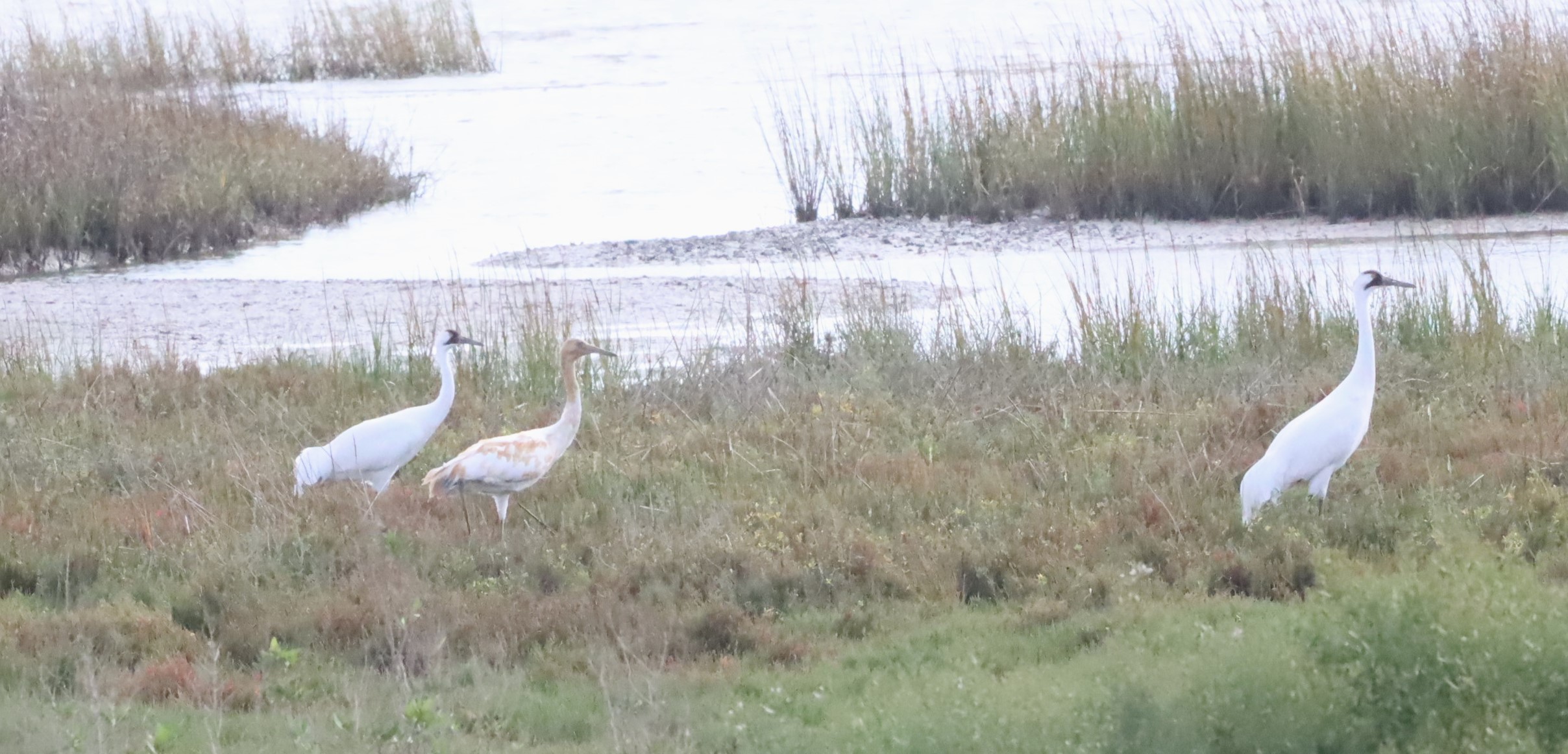
We had not yet gone to the Aransas National Wildlife Refuge, so we invited Dan and Barb. Packing our our picnic lunch we headed there, looking for a day of birding, alligators, and perhaps a snake or armadillo. It’s a short drive, about 45 minutes, to the refuge which was established to protect the few remaining Whooping Cranes. Their numbers had plummeted to only twenty nine and the Whooping Cranes seemed to be headed for extinction, However, enacting protections, the numbers have slowly rose in the past century and today there are over eight hundred of the tall beautiful birds.
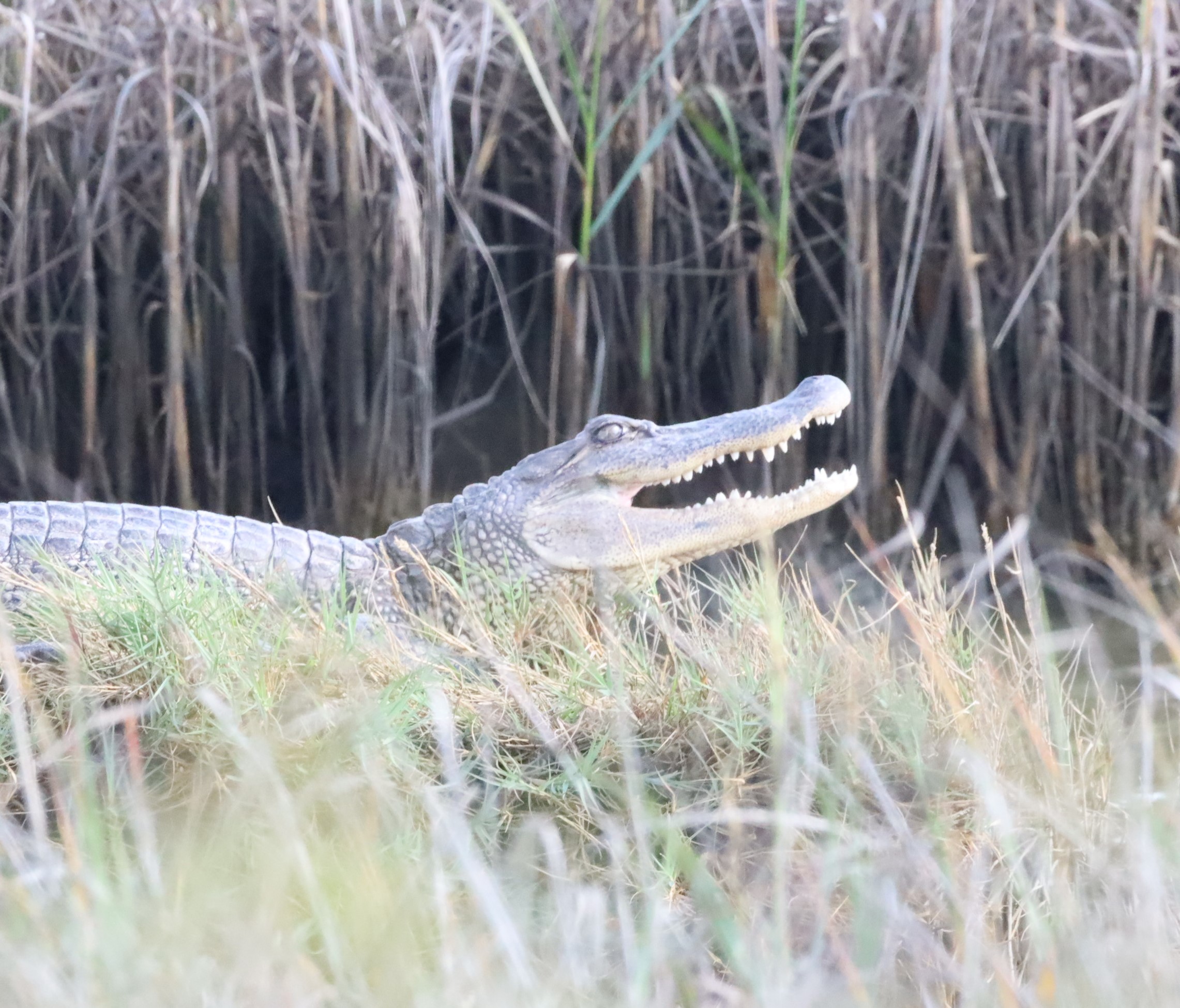
Now there are often whoopers on the Heron Flats Trail or visible from the Observation Tower and so those were the first two places we birded. The Heron Flats Trail is about one and a half miles in length. Walking the trail, you must be aware of both the alligators that cross the hike and be on the lookout for poisonous snakes, (besides being covered for the mosquitoes)!
The small observation platform gave us our first look at the flats, and Barb and Dan spotted either a Virginia Rail or a King Rail. The two birds are very similar in looks, but they were both new birds for their life list and so they added the King Rail. It would also have been a new bird for us but we were both taking pictures of other birds and never saw the rail before it disappeared into the brush.
Hiking down the trail we passed a flock of rosette spoonbills, numerous Great Blue Herons, (some white), and watched a pair of acrobatic Royal terns swooping down on surfacing minnows.
At one point a flock of Greater Kiskadees landed in a bush me and I got a great image!
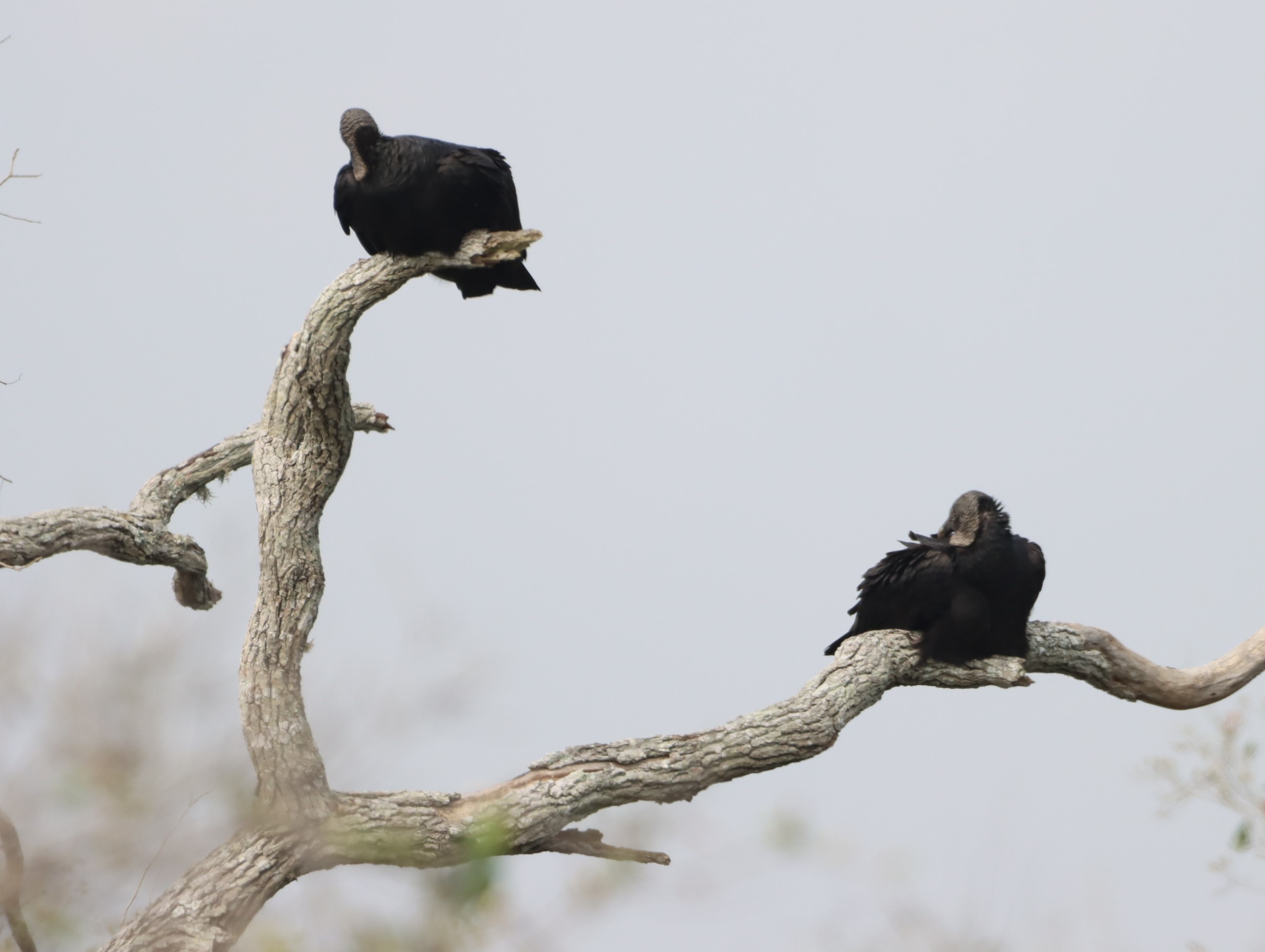
We were all surprised that there was only one alligator on the brackish ponds and the only other birds we saw were pied billed grebes, Several Eastern Phoebes posed for pictures along with the ever present Northern Mockingbirds. Our next drive was to the Observation Towers, The tallest tower, has a great view of the waterways and brush covered mud flats. Usually three whooper’s, a family unit, are visible but all we saw were great white herons,
Black vultures, and Eastern Flycatchers. A metal post stood in the saltwater marsh and a Belted Kingfisher scanned the water before diving from its raised platform and making a fast meal of the rising baitfish. Three beautiful and brightly colored orange mushrooms had grown in a small area surrounded by the parking lot. I took a picture of them but didn’t touch them aware that many of the bright fungi were poisonous.
From the parking lot we turned onto the Eleven Mile Road. At one point we did spot a Golden Fronted Woodpecker which perched long enough for ne to get a focused picture. A little further several cars were stopped and the people had cameras and tripods set up!
It was the place where a Bald Eagle Pair had in past years, unsuccessfully nested and this year the male bird had returned! It was perched high on a dead branch of a towering Live Oak. Preening, it would stop and look at the eerie but we could not see if a female was sitting on eggs, One can hope for a successful hatch and rearing of young.
It has been over forty years since a pair had a successful rearing of eaglets on the refuge. We didn’t see much else on the drive as everything is parched from the prolonged drought, (we are on stage three water conditions as the local reservoirs are below twenty percent full). Reaching the main road we made our final stop at Jones Lake. Two alligators were sunning themselves and several Buffalohead ducks tempted fate by swimming near the large gators. A bobcat had been spotted that morning but didn’t appear.
On the way out, Barb spotted an armadillo! It was the first live one we have seen since we arrived in Texas. The armadillos are supposed to taste like pork but they do carry leprosy. Luckily, we don’t carry the genes that make some people susceptible. Even though we did not spot any whooping cranes, it was a successful day of birding with friends, Babr and Dan have almost as many birds on their life list and Dan is a better photographer that I am so I always try to learn some of his techniques! Clear skies and Happy New Year!

Wednesday, December 13, 2023

A not very friendly Cottonmouth, birding at the Aransas Wildlife Refuge

We had already had a great day at the Aransas National Wildlife Reserve! A family group of whooping cranes were close to the road at Heron Flats, along with another flock of five about a mile east on the same flat. Now we were driving on the Nine Mile one-way road when I noticed something in the middle of the road. I yelled snake and Renita stopped the car.
It had already been a great day of birding at the refuge. The family group of whooping cranes had posed for pictures and was the closest we had ever been at the refuge.
Usually, the whoopers are far away as each family stakes out a one-and-a-half-mile territory, which they strongly defend! Our next stop was at the Tower and the marsh was empty of whooping cranes. Walking the Oak Forest Trail is usually a good place to take photos of various egrets and herons along with other shorebirds.
As we watched a American Kestrel hunted for its lunch and I got a great short as it hovered oved the marsh. It dove and took something back to its perch, but we could not see what it had caught.
On the bay, a great blue heron landed, and an American White pelican flew over my head.
Willets fed in the shallow water and a Marbled Godwit got close enough for a picture.
As we drove over it Renita parked the car so we could identify the road killed serpent. Walking back, we all noticed that the head had moved and that the snake was alive. It had been sunning itself by warming up on the road. The snake had a triangle shaped head and did not like our presence.
It opened its mouth and showed its fangs and white cotton colored mouth/throat. It also had a cat’s eye pupil which always indicates a poisonous snake. Of course, it was a cotton mouth! They are known for being aggressive, but this snake just wanted to escape. It rattled its tail mimicking a rattlesnake, even though it did not have any rattles. Continuing to open its mouth it struck Dan, but he was too far away for it to hit, he has owned snakes before and knows to keep clear. Barb and Renita joined us in watching the beautiful snake as it crawled toward the roadside ditch. Stopping there, it tried to hide in the short grass and its camouflage was pretty good, but it still stood out.
If we hadn’t known it was there, it would have been easy to miss the reptile and step on it. We left the snake unharmed; they do have an important place it the ecosystem and make up one of the menu items for whooping cranes. The wind came up during lunch and it kept the mosquitos at bay as we ate at the picnic area. Now usually we walk the one plus mile of the Heron Flats trail. But today was not a good day as the mosquitoes were swarming and when we reached a sheltered area I got bitten even through the heavy shirt I was wearing. My lotion had worn off and it was time to turn around. Usually, we see quite a few alligators but today there was only one.
It was resting on a log on the bay side of the trail. We have never seen one on that side, so it was another first for the day. From now on we must be leery of gators lurking on either side. It was another fun day at the Aransas Wildlife Refuge. The birds had posed nicely, and we even got a new bird for our life list.
It was a Savannah Sparrow. Many of the sparrows are hard to identify but I got a great picture and was able to id it with our bird book. Clear skies

Tuesday, March 21, 2023

Part 2, Birding at the Aransas National Wildlife Refuge

Barb drove their jeep and Dan and I sat with our cameras in our laps. Usually there are raptors on many of the electrical poles but we never saw a single one . Arriving at the Aransas National Wildlife Refuge we stopped at the new refuge headquarters. Renita posed next to a life size statue of a whooping crane, for scale but there were no other displays. Apparently they were still finishing them so hopefully we will see them when we come back in the fall. Leaving the headquarters, we next drove to Jones lake. A flock of blue winged teals
took off as we walked out onto the platform.
Feral hogs were rooting up the grass in the distance and a deer grazed as an alligator swam towards us.
A pair of pied bill grebes exhibited their courtship dance, not caring the least about us taking images.
A bird was singing and using the Merlin app it identified the song as from a white eyed vireo. Later I got a great image of a white eyed vireo as we walked the Heron Flats Trail.
From Jones Lake our next stop was at the Observation Towers where, as usual we saw a family of whooping cranes several miles away.
Its their usual territory and if you want to see them up close you need to take a cruise on the Skimmer, which is a great birding adventure!
Several black vultures at on a tree top and taking the boardwalk out to the bay, we were rewarded with shots of a great blue in flight,
and a white morph great blue heron.
We watched as a shore bird found and tried to devour a small blue crab.
It seemed to be bothered by its small claws and eventually gave up its meal plans. Driving the eleven mile road we hoped to see a nesting pair of bald eagles but they had abandoned the nest.
After the Eleven mile road we stopped for lunch at the picnic area and then drove to the Heron Flats Trail. A reddish egret exhibited it “drunken walk”, as it hunted and caught a crawfish,
(which it had a heck of a time swallowing). Most herons and egrets slowly wade as they fish but the reddish egret, including a white morph will run erratically after it spots its prey. A brown pelican flew by.
Its hard to believe that the birds almost went extinct due to the widespread use of DDT. A book describng the bird loss came out in the sixties, titled Silent Spring. A large group of rosette spoonbills slept on a small island sharing their resting spot with a couple of double crested cormorants and a snowy egret.
Our last bird of the day was one we had already spotted. It was a flight picture of a lesser yellowlegs.
It was a great picture to end the day. Thanks for driving Barb! Clear skies As usual my identification of several of the birds may be wrong so if you disagree, please comment.