Showing posts with label whooping crranes. Show all posts
Wednesday, December 3, 2025
A Flock of Ten Whooping Cranes, November 28th, 2025
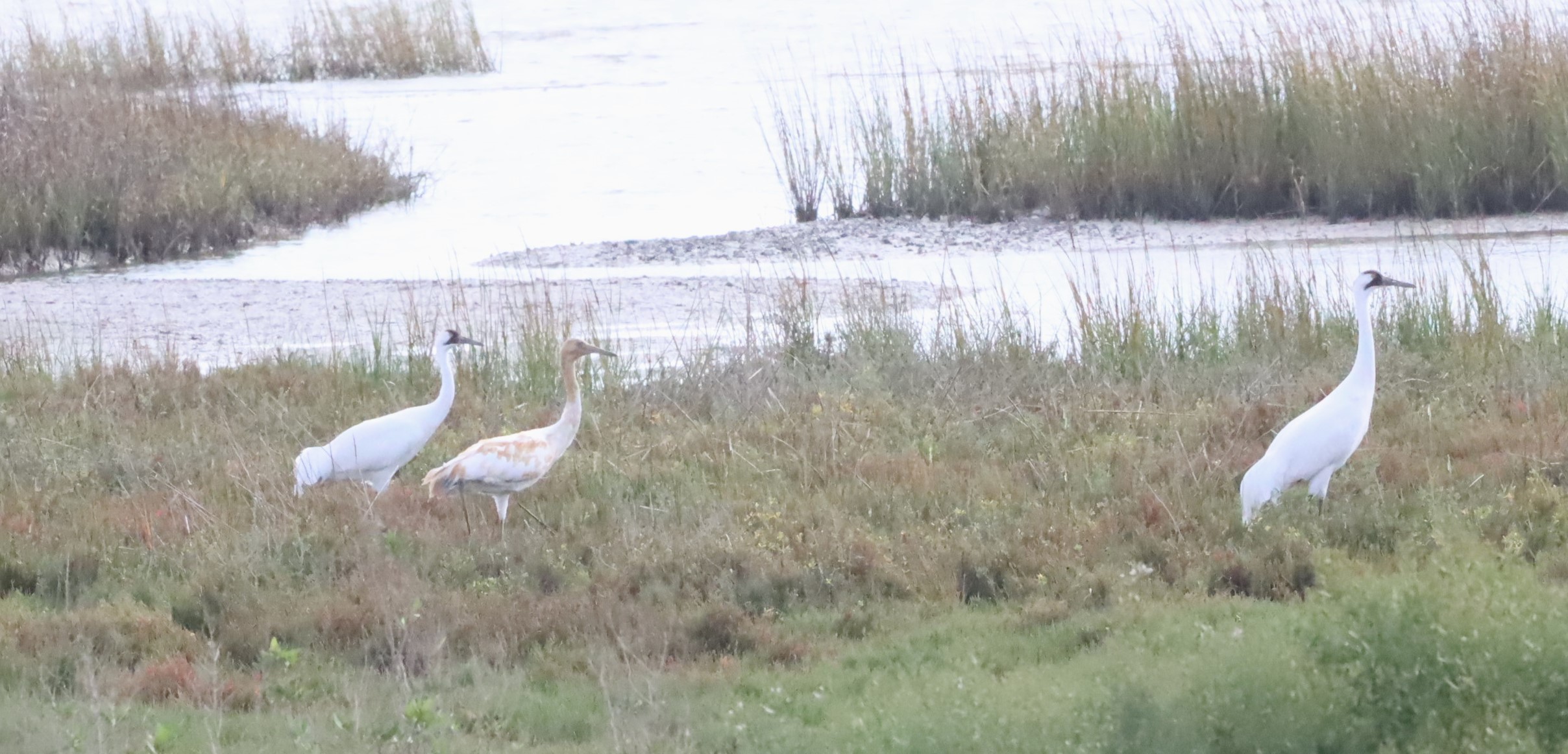
We had heard that the Whooping Cranes had arrived in Lamar. They usual are here by mid to late October but we had only had reports of three present in the field alongside St Charles Bay. Nearing Eighth Street we saw stopped cars and as we turned south we spotted a group of ten!
It’s unusual to see so many in one spot, this flock was composed of eight adults and two colts, (young of the year with brown and white plumage). The colts are given that name as they prance around after leaving the nest. By the time they are here in Texas we usually see them with their heads down feeding voraciously after the long flight from northern Canada.
The adults were calling to each other, with their necks stretched out straight up into the sky. There were numerous calls, or warnings, and it was a vocal fight of ownership of the field. Pairs and then a single bird decided to look elsewhere for their own territory, (each family will claim an area of about one and a half miles.
Two took off and flew south to a feeder located in a field edged with cattails. The single flew in circles, and another pair took off, heading towards the back bay. We often see a pair when we kayak St Charles Bay and travel by motorboat to Dunham’s Bay. The latter bay borders the Intracoastal. The intracoastal is filled with barges which the Whooping Cranes ignore.
It’s an area called the Blackjack Peninsula. The Aransas Wildlife Refuge owns most of the area and frequently sets controlled burns. The whoopers follow the fires and feed on exposed snakes, (The snakes are a safely killed by the cranes and are then swallowed whole).
At one point two families Males, approached each other. They then raised their necks and squared off as if to fight. However, one of the pairs backed off and leapt into the air looking for a more welcome place.
There were numerous Whooping Cranes flying around us, before disappearing over the trees. Three sandhill cranes stood by and watched the departures, (they are smaller, shorter, than the Whoopers), and will push their luck before backing off when challenged.
The adult Whoopers are a fearsome opponent, a little over five feet tall, and have been documented as killing a feral hog which approached their young. The adult had hit the pig in the head and had killed it instantly. That’s how strong their beaks are!
We decided to drive to 12th street hoping for a closer view, but we couldn’t find one. Several Rosette Spoonbills perched in a tree, and an American Kestrel preened itself near Big Tree.
Having had a great morning birding, it was time to head back to our fifth wheel to upload the pictures and rest up for the nights card game of Joker and Pegs. Clear skies.
Ps If you want to see Whooping Cranes up close. Go to the small town of Lamar and drive along St Charles Bay. They are a lot closer than you will usually find them at the Aransas National Wildlife Refuge
Friday, December 22, 2023
The Whooping Cranes at Lamar, Texas, and a white-tailed kite
We, (Barb Dan, Renita, and I), decided to cross the Copano Bay Bridge and photograph the Whooping cranes that winter in Lamar, Texas. It’s a short drive from our rv park, (about nine miles), and friends had reported seeing as many as eighteen whooping cranes in the fields along St Charles Bay.
The population of whooping cranes last year was five hundred and forty-two(about). Eighteen whooping cranes would be like seeing thirty grizzly bears in a day in Grand Teton National Park, (the most we have ever seen is eight). Usually, any whooping crane family controls about a mile and a half of territory and fights any others trying to fly in. So the question is, what’s going on?
The answer is of course the feeders. They are timed to release deer food which the whooping cranes also love. The whoopers wait by the feeders in several different areas. They also feed on cattle forage and are not bothered by the cows. They also try to chase away sandhill cranes, which are smaller, so the fields of Lamar are a busy place.
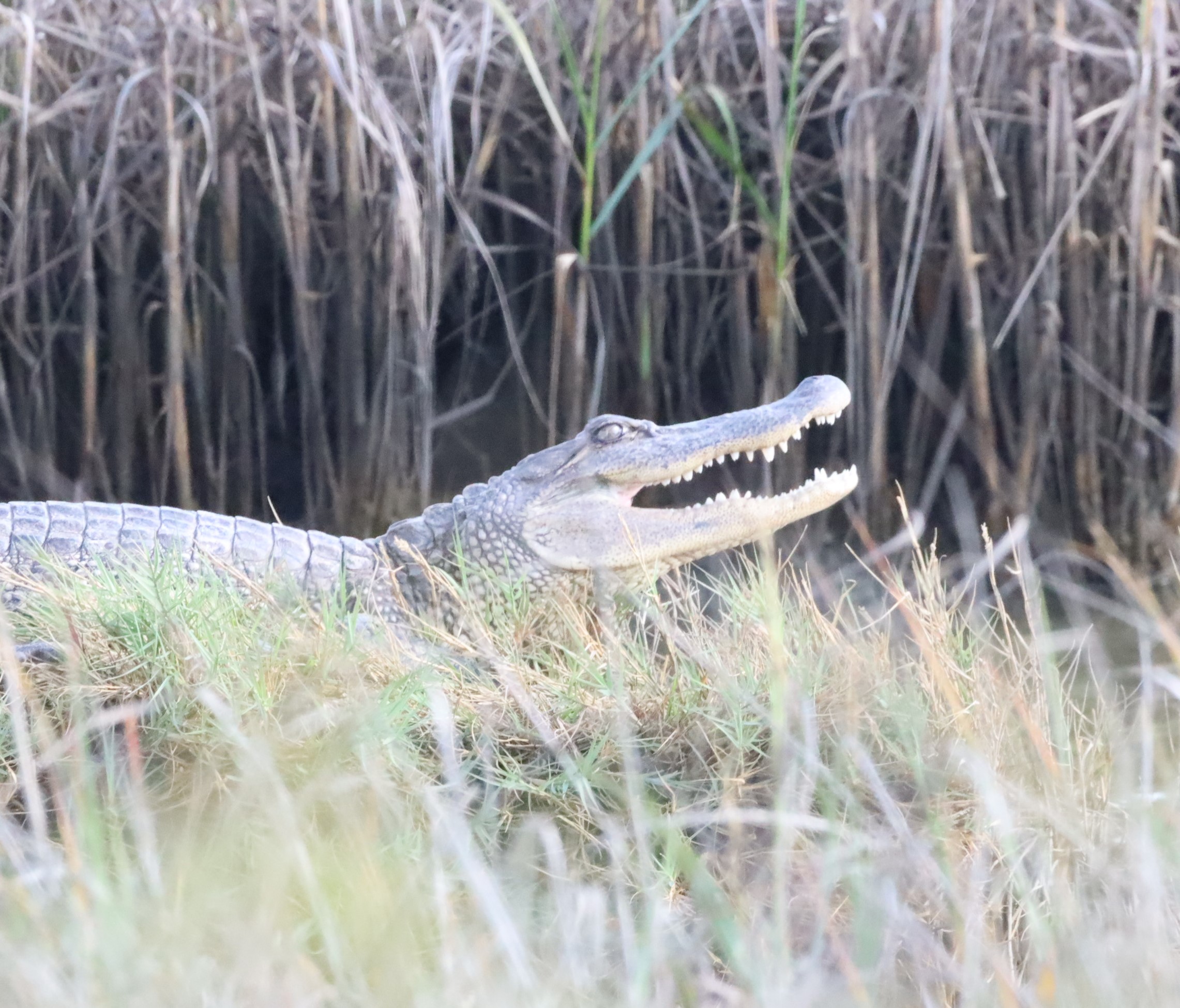
Driving to Lamar we turned down fourth street. A resident alligator laid in the backyard of a house, (and we later learned that as many as five warm up in the mowed grass). The cattails blocked our view of the first feeder. Turning left we passed eighth street and saw the whoopers. Pulling over we counted twenty of the huge cranes, besides a flock of sandhills. Twenty is the most we have ever seen in one day, and they seemed to tolerate each other.
We have seen the immature whoopers form large flocks of as many as eight, but these were not all what we call teenagers. There were at least two-family groups with a colt, this year’s hatchling. The colts still have many brown feathers and a brown head.
A family usually has one of the adults watching for danger while the other adult and the colt feed. Besides looking for predators, (an adult whooping crane has been documented as killing a feral hog with a single blow of it’s sharp bill to the pigs head.
As we watched the whooping cranes, a flight of about thirty roseate spoon bills landed in the pond. Two others perched in a tree, and a long billed dowitcher landed near us. At one point two of the immature whooping cranes headed to the herd of cattle, but an adult whooping crane ran them off and chasing them back. Next, wo more whoopers flew in and several of the whoopers lifted the heads straight up and let out warning calls.
The new whoopers didn’t care and landed a little distance away. They then fed and slowly walked towards the others which is pretty unusual as the dominant birds will often charge the newcomers, raising their wings and even attacking them with their beaks, (unusual but we did, in an earlier blog, post a picture of such a whooping crane fight).
There were quite a few other birders on the roads and so we decided to drive over to Big Tree. Renita was driving slowly when I suddenly yelled stop as I saw a small hawk. It had a white head, tail, and underside! It was a white-tailed kite, which are usually only seen further south. It was only the second time we have ever spotted one.
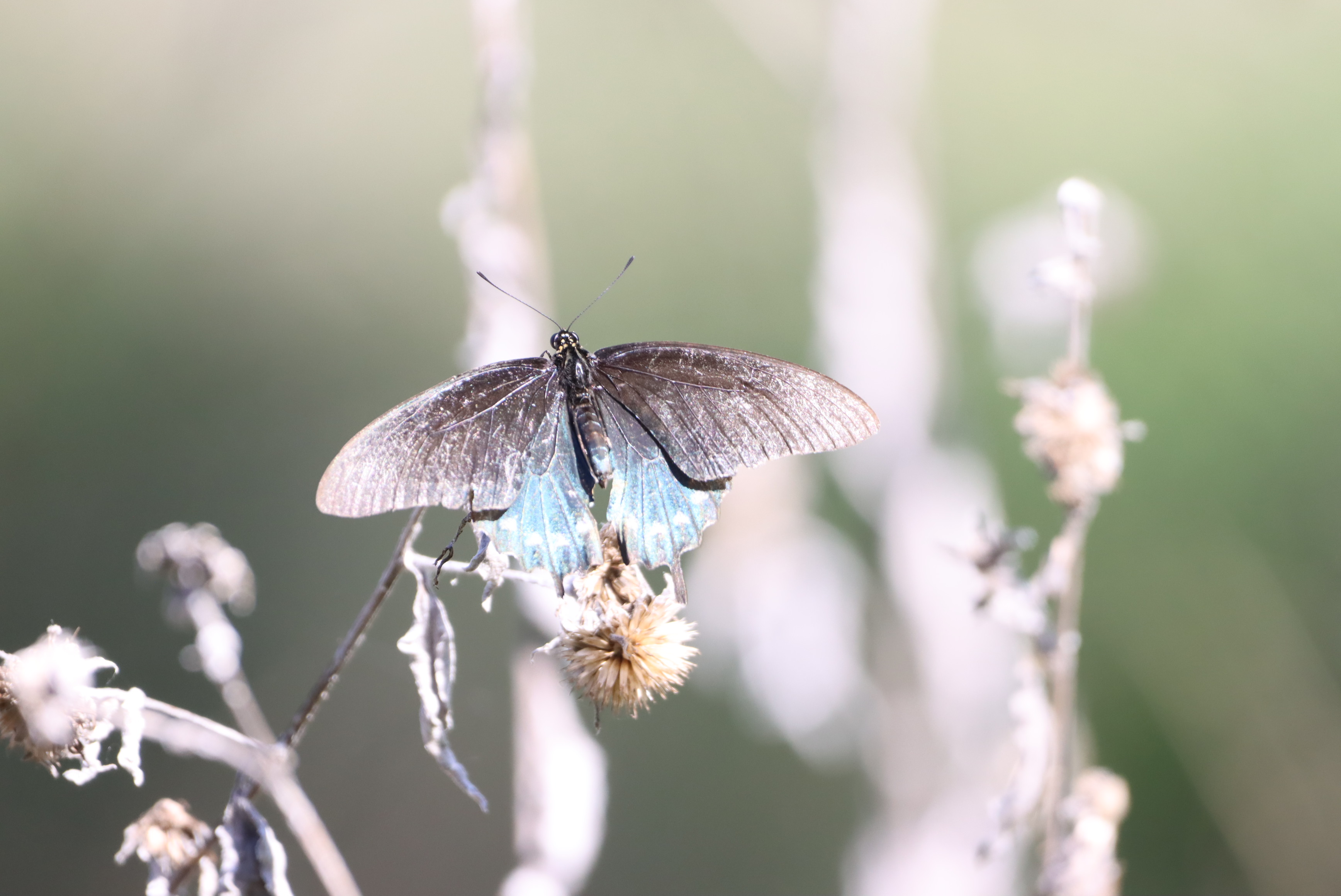
Walking around Big Tree we saw monarch butterfies,(which are usually far south by this time and a swallowtail butterfly.What a day! Twenty whooping cranes and a white-tailed kite. We also met and talked with other birders, including one who leads birding adventures three days a week. Anytime you can bird with an expert is an opportunity you should not pass up!
So many endangered birds in close proximity is dangerous, One worries that they could easily spread the avian bird flu throughout the flock. One way to prevent this is to stop feeding the whoopers, with deer feeders. This would cause them to spread out and seek their normal food, preventing a disaster. Why doesn’t the US Fish and Wildlife and the Texas Game and Fish Department step up?
Clear skies
Wednesday, December 13, 2023
A not very friendly Cottonmouth, birding at the Aransas Wildlife Refuge
We had already had a great day at the Aransas National Wildlife Reserve! A family group of whooping cranes were close to the road at Heron Flats, along with another flock of five about a mile east on the same flat. Now we were driving on the Nine Mile one-way road when I noticed something in the middle of the road. I yelled snake and Renita stopped the car.
It had already been a great day of birding at the refuge. The family group of whooping cranes had posed for pictures and was the closest we had ever been at the refuge. Usually, the whoopers are far away as each family stakes out a one-and-a-half-mile territory, which they strongly defend!
Our next stop was at the Tower and the marsh was empty of whooping cranes. Walking the Oak Forest Trail is usually a good place to take photos of various egrets and herons along with other shorebirds. As we watched a American Kestrel hunted for its lunch and I got a great short as it hovered oved the marsh. It dove and took something back to its perch, but we could not see what it had caught.
On the bay, a great blue heron landed, and an American White pelican flew over my head. Willets fed in the shallow water and a Marbled Godwit got close enough for a picture.
As we drove over it Renita parked the car so we could identify the road killed serpent. Walking back, we all noticed that the head had moved and that the snake was alive. It had been sunning itself by warming up on the road.
The snake had a triangle shaped head and did not like our presence. It opened its mouth and showed its fangs and white cotton colored mouth/throat. It also had a cat’s eye pupil which always indicates a poisonous snake. Of course, it was a cotton mouth! They are known for being aggressive, but this snake just wanted to escape.
It rattled its tail mimicking a rattlesnake, even though it did not have any rattles. Continuing to open its mouth it struck Dan, but he was too far away for it to hit, he has owned snakes before and knows to keep clear.
Barb and Renita joined us in watching the beautiful snake as it crawled toward the roadside ditch. Stopping there, it tried to hide in the short grass and its camouflage was pretty good, but it still stood out. If we hadn’t known it was there, it would have been easy to miss the reptile and step on it. We left the snake unharmed; they do have an important place it the ecosystem and make up one of the menu items for whooping cranes.
The wind came up during lunch and it kept the mosquitos at bay as we ate at the picnic area. Now usually we walk the one plus mile of the Heron Flats trail. But today was not a good day as the mosquitoes were swarming and when we reached a sheltered area I got bitten even through the heavy shirt I was wearing. My lotion had worn off and it was time to turn around.
Usually, we see quite a few alligators but today there was only one. It was resting on a log on the bay side of the trail. We have never seen one on that side, so it was another first for the day. From now on we must be leery of gators lurking on either side.
It was another fun day at the Aransas Wildlife Refuge. The birds had posed nicely, and we even got a new bird for our life list. It was a Savannah Sparrow. Many of the sparrows are hard to identify but I got a great picture and was able to id it with our bird book. Clear skies
Subscribe to:
Posts (Atom)