Monday, April 16, 2018

A Great Week of Birding on Grand Isle

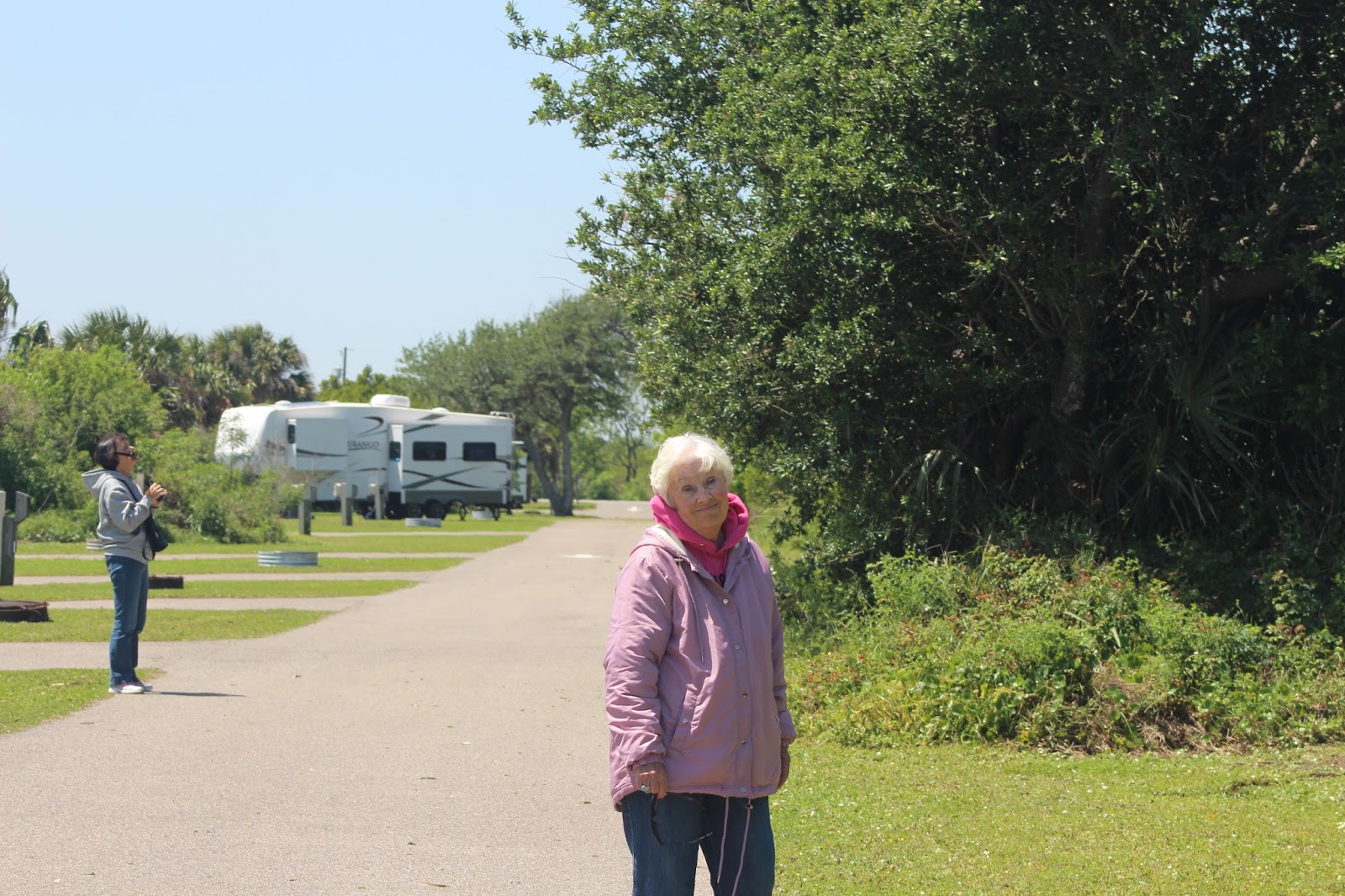
As soon as we arrived on Grand isle, we spotted a hooded warbler. It was right behind out fifth wheel, in the state park campground.
The blackberries were in full bloom and it wasn't too long before a female ruby throated hummingbird made an appearance and next a small yellow warbler landed on the ground, and hopped around catching insects!
It was a great welcome to Grand Isle and when we told my sister Connie she reported that others on the island had been seeing other brightly colored birds in the woods that contained the Bird Sanctuary.
We were camping in the state park and the next morning we decided to spend time there as the day before had held such promise. We were quickly rewarded with sightings of  male Summer Tanagers, one fully mature and one with a beautiful coat of reds and yellows, (a first spring immature male).
The morning wasn't over yet as we continued to spot more ruby hummers as well as several rose breasted grosbeak.
Our pleasure continued when a brightly colored scarlet tanager showed itself for a moment before quickly flying into the thick brush.
We also spotted several Baltimore orioles, and this was just the first day. The rest of the week wasn't any different as the birds seemed to stay put. Perhaps they were simply rebuilding their strength before continuing their migration or did they sense the brutal snow storms up  north?
On Thursday, our discoveries didn't stop, when we shot a great image of an Amercian redstart! It flitted in the thick brush, teasing us with the orange patches on its wings, and after several so so images it landed in the street looking for rocks for its crop.
More birds followed, another oriole, an orchard oriole this time(?), with both females and males making an appearance. As the week progressed we took some time off for a little fishing and on Friday a new cold front threatened when the temperatures dropped and storm clouds threatened.
The Blessing of the Fleet was being celebrated and the heavy rains delayed the boat parade but it didn't stop the event as carnival rides and music continued in and around a tented pavilion. The actual blessings were delayed from Saturday till Sunday as the front roared in with heavy rains followed by cold temperatures and a strong north wind.
Taking a break from the festivities we went back to our camper and grabbed the binoculars and cameras for a short bird walk.. The sun had come out and with it the birds seemed to have lost most of their caution.
None of the birds had left and as we walked we pointed out tanagers and indigos, they were everywhere.Suddenly a small bird landed near me and I instantly recognized it. It had a bright red breast, a blue head and neck and a green back. It was the unmistakable color of a painted bunting!
It was the second we have seen this year, the other was at High island Bird Sanctuary, but this one was so close and it paused for just long enough that I was able to get a good image.
It flew to another bush where it teased us before making a show in some thick brush before Connie and Renita were able to confirm my sighting.Its only the fourth painted bunting we have seen, and one of the other sightings had been two years ago in almost the same spot.
This week, Grand Isle is hosting its annual Spring Bird festival. We plan on attending some of the events and perhaps we will see another painted bunting. Maybe we can also get some help on identifying some of the small warblers we have spotted and imaged. There are so many and several have crossed making the id's even harder! Clear skies


Sunday, April 15, 2018

Betty's Rv: Abbeyville, Louisiana

It was a short pull from High Island, Texas to our next destination at Betty's Rv. Betty's is located in Abbeville, Louisiana and is the best rv park in all the state. It's small and nothing fancy but if you want to immerse yourself in Cajun culture, there is simply no other place like it! As soon as we arrived Jim and Nancy came out of their motor home and greeted us, (They write a blog,  runningdownourdream listed on our page, and started full time rving the same year we did, in 2007).
The place is so popular that we could only get in for three nights. The park has seventeen spaces and many of the guests had stayed since Mardi Gras. Each day Betty has something planned, or at least suggestions for the best place to see what Louisiana life is all about.
The day after we arrived, a group of us traveled eight miles to Abshires County Store. Its a simple and small building but the food is great. Renita and I had the grilled shrimp salad which turned out to be the best salad I have ever eaten!

The cook, (the wife usually), prepares all the food on  a small cook surface. Its so small that she can only cook four meals at a time! If someone at the table orders something different they will have to wait, (they only have nineteen plates and if there are more than nineteen people you have to wait till someone finishes and the plates are washed)!
The salad consisted of lettuce, topped with grilled shrimp and grilled mushrooms, all seasoned with Cajun spices. It's then further topped with lots of grated Parmesan, ranch dressing, and lots and lots of bacon bits. The first bite filled my mouth with a flavor that said Louisiana!
The third day was a Sunday and we went to mass at St Mary Magdalene's. The church was built in 1908 and the stained glass alone is worth visiting the church to see! As we travel we like to visit churches of all faiths and all are open to view by the public, except for one in Salt Lake City. That afternoon, the weather was cold but still the campers all met for Happy Hour insides Betty's house.
The next day we needed to fix the closet in our fifth wheel, between rough Texas and Louisiana roads the shelf has collapsed and the fix took three trips to the local Lowe's.
Betty had offered to let us show out jewelry at that afternoons Happy Hour. Linda, another guest also is a crafter and so we both displayed our work on the outside side tables. Betty also loves our wire work and stones and she purchased one of our gold bracelets with a gold and blue tiger eye cabochon.
She is also a folk artist and decorates her place with many pieces, which I have published in an earlier blog. This year one of her guests had painted decorations on old satellite dishes. They were really nice but I missed seeing lots of Betty' painted driftwood pieces.
Too soon our time at Betty's was up and as we hooked up, Betty along with our old friends and new came out and gave a good bye huge. The nice thing about being our age is getting lots of hugs! We had a great time there and we look forward to spending more time at Betty's Rv next year. Clear skies

Sunday, April 8, 2018

High Island, Spring 2018


We said our goodbyes to Renita’s sister Pam and her husband Roy, before hooking up our fifth wheel and heading for High Island Texas. There we planned on spending a day birding, at the Bird Sanctuaries owned and maintained by the Houston Audubon Society.
It was a short drive, only one hundred and forty miles, and involved a ferry trip from Galveston Island to the Bolivar Peninsula. Reaching the High Island Rv park we set up and planned the next day’s birding. Our plan was to first register at the Boy Scout Woods, spend some time birding at the drips and then spend the afternoon at the Rookery at Smith Oaks Pond.
Our first stop was at the private lawn. Usually we see quite a few birds there but today the only bird we spotted was a cardinal.
From there we backtracked to the cypress swamp and the only flying creatures were all mosquitoes. Heading to the Cathedral we sat for a while and had little luck.
Deciding to go to Promothory Pond we met a large group of fellow birders, as they were leaving. Shortly after sitting down two dark small birds flew from the woods into the tall reeds. I saw they were a deep blue and sure enough they were blue indigo buntings!
We also spotted circling turkey vultures, tree swallows, other swallows and some distant flying herons. Common grackles perched on power lines.
Heading back to the cathedral we discussed what to do. We had heard that a painted bunting had been spotted at the first drip and so we went back to the Grand Stand and took a seat. Deciding to wait it out we were rewarded with spotting a Swainsons thrush, a red and white eyed vireo, more cardinals and a hooded warbler.
Then as I looked at the other small pond Renita told me that a painted bunting was at the drip! I moved my binoculars to the drip and was able to catch a glimpse of it before it flew into the woods. It was only the second painted bunting we have seen and made the birding trip, (our first and best viewing of a painted bunting occurred at Grand Isle, Louisiana)! Of course the pictures we took did not turn out.
Another indigo bunting stopped at the drip along with a catbird and a hooded warbler. We even got to see a ruby throated hummingbird! Its always amazing that most of these birds had just flown nonstop across the Gulf of Mexico. They had encountered strong headwinds while crossing the Gulf, and we were seeing the exhausted birds during what is known as a fallout.
Returning to our campsite we ate lunch and rested before heading to our other favorite spots, Smiths Pond, The Rookery, and the Oak Sanctuary. Before starting out we stopped at the check in tent where the birder told us that a summer tanager had been spotted.
Heading for Doms Drip, Renita spotted another indigo bunting and the summer tanager! They were both feeding on mulberries, always a great draw for the famished birds. Renita mentioned to me to be careful about where I sat and sure enough, at Doms Drip, I sat on some ripe mulberries. At least when you are my age, you don’t have to be embarrassed about stains on the seat of your pants!
We then walked to the Oak Sanctuary and read the plaque describing the huge registered live oak, before cutting through to Smiths Pond. The pond was created to provide water for the Town of High Island and was also a source of clay used in the local oil fields. Smiths pond was quite different as the Audubon Society had constructed a long narrow strip of land and had planted trees. It was one of several projects that are intended to become future rookeries. We didn’t see any birds there, only three large alligators sunning themselves on the barren strip of land.
Clay bottom Pond, constructed as an additional fresh water catchment and source of more clay, had also undergone several major noticeable changes. The dense invasive species, Chinese Tallow bushes, had been chopped down for removal. Its an invasive species of brush that doesn’t provide any forage or is of little value to the birds.
Nearing the Rookery, we stopped to enjoy our first glimpse of roseate spoonbills and great white egrets in their breeding plumage. The adult rosy’s are a brilliant pink and are adorned with bright red shoulders and an orange section under their wings. Such a beautiful bird!
The great white egrets had been nesting longer and many had newborn chicks raising their heads begging food from the parents.
Male great whites were still displaying their wedding veils while others were sitting on the large pale blue eggs. They would occasionally rise and carefully turn the eggs with their beaks.
Most of the rosies had not yet laid eggs and were busy constructing large nests.
There was also a lot of mating behavior taking place, and males were still fighting for any available branch sturdy enough to hole a nests weight.
Most of the good high spots had already been taken and the lower nest appeared vulnerable to the alligators.
The alligators do occasionally eat an unwary bird, but they also provide a defense for the birds by eating any raccoons that cross to the island looking for eggs! We didn’t see any birds getting eaten as we moved from birding platform to platform enjoying the racket of the rookery.
Renita and I took turns with our telephoto lens equipped camera trying to catch a great shot of the landing birds, (you are only about thirty yards from the rookery island). My best shot was of a landing great white egret and hers was of a landing rosette spoonbill.
There were other birds there, including snowy egrets, double crested cormorants and tri color herons.
Clay bottom pond is further used by American Ibis, little blue herons, and green herons. The highest bird count took place at sunset, and one year reached almost fourteen thousand birds!
Tired, but happy, we drove back to our rig. It had been another great birding day at the High Island! Its one of the finest birding experiences we have had, and we highly recommend it to anyone who wants to see what a dinosaur nesting site looked like. After all birds are the direct descendants of the dinosaurs! Clear skies.

Friday, April 6, 2018

The Cattle Drive Across the Colorado 2018, Matagorda, Texas


Each year, we leave the Coastal Bend and head to Louisiana. Our goal of coarse is to get back to Wyoming, but there’s still too much snow so we meander a bit. We usually make our first stop at Matagorda, Texas. There we fish for a few days, and if we are lucky, get to watch the cattle drive across the Colorado river.
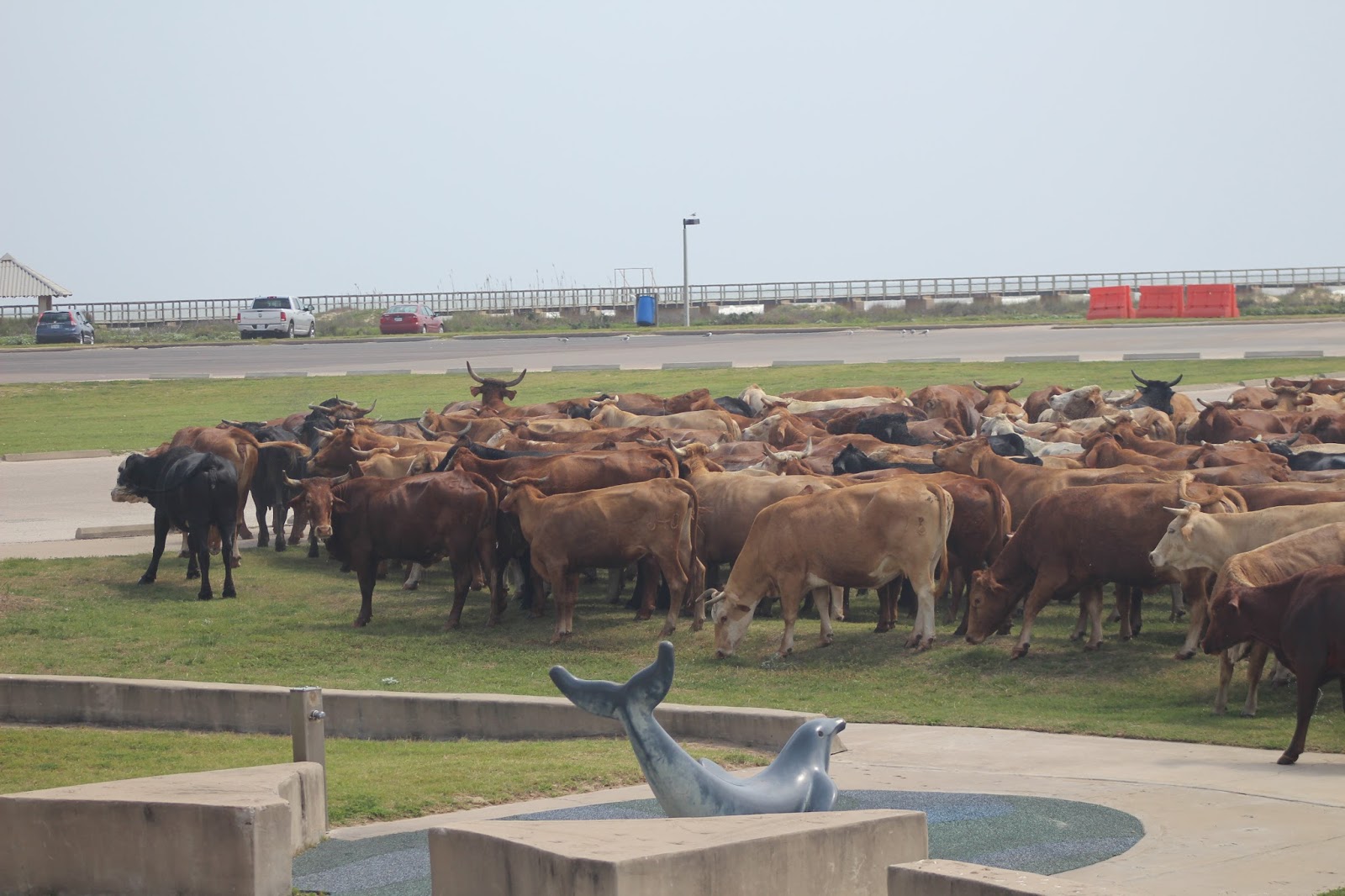
The cattle spend their winter on a long and isolated barrier island, before being rounded up. Then, depending on tides and weather conditions, the cattle are driven to the rivers edge before swimming across the river. Sometimes the older animals will cross before the drive but this year the old lead cow was gone, and the cattle were reluctant to make the crossing.
We watched as the cowboys and cowgirls, rounded up the cattle and then drove them to the waters edge. The cattle seemed reluctant at first, but with some hurrahs, the sound of snapping lariats, and even a gun shot, finally entered the water.
They didn’t get far before they realized the water was deep and they balked, turning around and having a Mexican standoff with the cowboys. With a few more words of encouragement they turned and finally started the swim.
The cattle were then herded across the river by two boats. Sometimes a game and fish boat was also present but this year it was just a couple of smaller fishing craft. Once the herd started to cross the rest followed, well most of them anyway, and safely made the crossing.
One calf, separated from its mom made a run for it and tried to escape down the jetty, One of the boats turned it back and it rejoined the herd.
The same calf got confused when it started to swim the river and one of the boats had to rescue the calf. It was too big to lift into the boat, so a cowboy and cowgirl grabbed the head of the animal while the boats captain motored the craft to the shallows.
There, a waiting cowboy roped the youngster and was able to lead it up to the frim ground. The calf again balked and planted its feet, but the cowboy and horse won the tussle as the calf trotted over and rejoined the herd.
The cattle quickly started feeding on the parks well-manicured lawn, the grass was greener on the other side.
With a few more yells they then moved into the holding pens. They used to be driven to another crossing, but a new bridge was built and now trucks arrived to take them to their new pasture.
So ended another drive and it also coincided with our last day at the park. The next morning, we hooked up and headed to High Island, which is one of our favorite birding sites, (Renita took all the images used in the blog).  Clear skies

Wednesday, April 4, 2018

Matagorda, Spring 2018


Its always bittersweet, when we leave our winter camp. The bitter part is leaving our friends while the sweetness is the traveling itch, to see new things and meet new people. As always we had our rig’s brakes checked and repacked the bearings, before hitching up and starting our trek to a favorite spot, Matagorda, Texas.
Each year we stop there for a few days of fishing and if the timing is right, watching the cattle drive across the Colorado River, (the Texas Colorado which is not the same as the western Colorado). Nearing Matagorda, we crossed the Colorado and saw that it was swollen with muddy water.
That’s not a good sign, as the fishing is usually off and this time it was no exception. We parked our rigs, we are traveling with Pam and Roy, before grabbing some frozen shrimp and mullet and heading to the fishing pier.
The pier was pretty full but we still managed to find a spot. As expected the water was muddy and the waves were a little high, both making the fishing tough. A few sheepshead had been caught, but our catch was hardhead catfish, whiting, grunts, and pinfish.
The next morning Roy went into town and discovered that there were no live shrimp! So much for the sheepshead! He did find some fresh dead shrimp, any bait is better then no bait, and we returned to the pier. I cast out a huge chunk of mullet, hoping for a big redfish or perhaps a shark.
The hardheads and crabs were biting, (the image is of a female crab with her egg mass exposed), In spite of them Roy was able to catch quite a few whiting. I sat there waiting for a bite when my big pole doubled over! Grabbing the pole I knew I had a large fish. It took off on a fast run, much like a large red. Sharks also run but their run isn’t quite as fast.
Fighting the fish in it made several long runs before we spotted it, an oversize red. Roy lowered my hoop net and I maneuvered the fish into the opening. As he started to lift the net, the rope broke, (I had been lazy and did not replace the old rope, so the net dropped into the water. I had to fight the fish to shore before lifting it up by the line, never a pleasant task when using braided line.
Securing the fish I measured it and took several images before successfully releasing the fish back into the water. Here in Texas, you are allowed to tag one oversize red, but these are the spawners and so I knew already I would release it. That was it for the second day and we never did have another pickup.
The next day the bait shop had live shrimp and I purchased a quart. Armed with a great sheepshead bait we hurried out to the pier. The water had cleared some but the waves were quite a bit higher, making the fishing even tougher. I quickly caught a keeper sheepshead and Roy netted the fish. He barely had time to put the net down before  a large fish hit his cut mullet bait.
After a nice battle, Roy brought the red in and I was able to net the fish. I really screwed up the net job as I hooked the hook in the underside of the netting. Luck was with us as a wave washed the fish into the hoop and we were able to lift the fish to the pier. It was a nice twenty-six inch slot fish.
We never did catch another keeper. I caught and released six under size sheepshead and Roy added more whiting, all destined for a fish fry in Iowa. My big catch of the day was wen I snagged my lost net and was able to retrieve it.  Running out of bait we returned just in time to watch the cowgirls and cowboys drive the cattle across the river. That's for another post. Clear skies